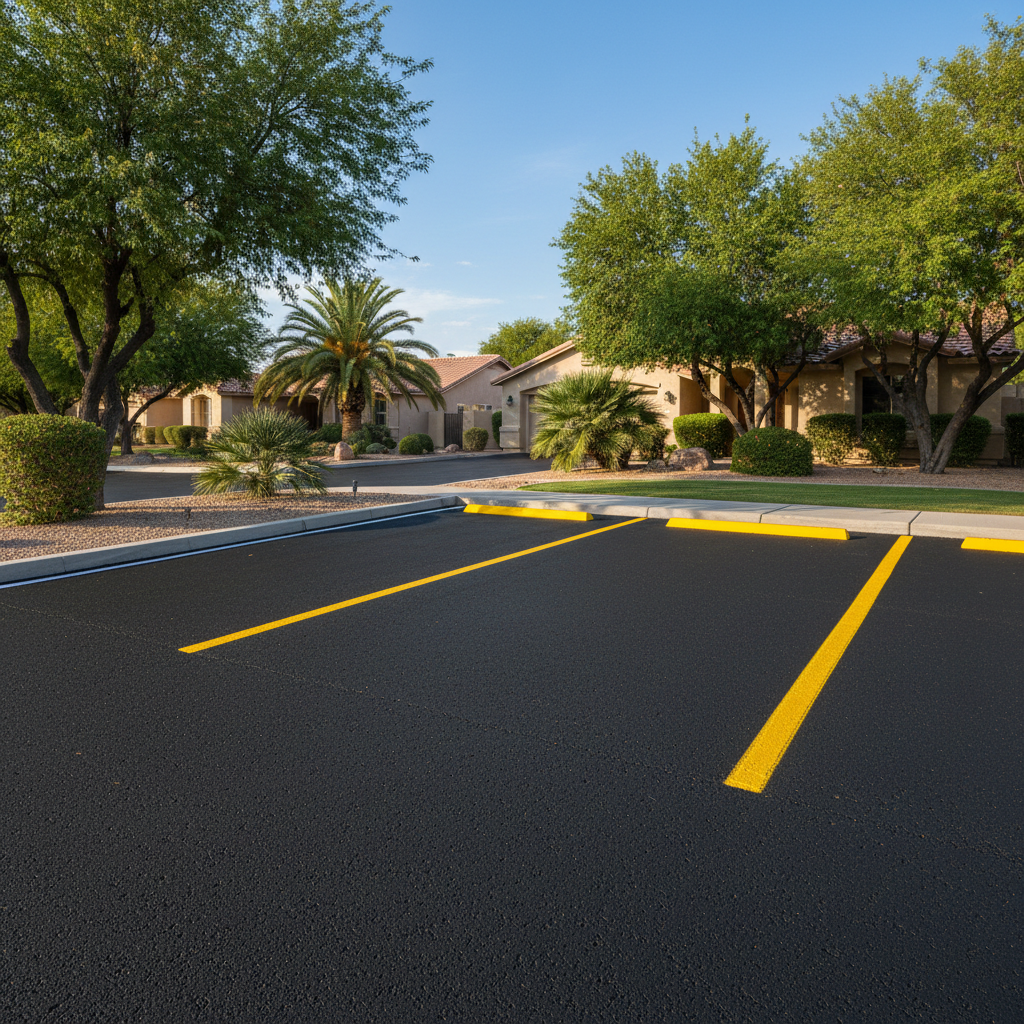
Alright, let's talk about asphalt striping. You've invested good money in getting those lines painted, whether it's for your business parking lot or your HOA's common areas right here in Peoria. You want 'em to last, don't you? Especially with our Arizona sun beating down and all that dust swirling around. I've seen a lot of striping jobs come and go, and I can tell you, knowing a few things really helps extend the life of your pavement markings.
Making Your Striping Last in the AZ Heat
The biggest enemy of asphalt striping here in Peoria isn't just cars driving over it; it's our climate. That intense UV radiation and extreme heat really do a number on paint. The sun's UV rays cause oxidation, which breaks down the binder in the asphalt and makes it brittle. This also makes your striping fade and crack much faster. So, here's what I suggest to fight back:
- Pick the Right Materials: This is the first step, and honestly, it's on us, your contractor. We've got to use paints made to stand up to our desert conditions. Standard traffic paint might only last a year or two here, but higher-quality, desert-specific materials or thermoplastic markings can stick around for 3-5 years, maybe even longer. Thermoplastic costs more upfront, sure, but it often pays for itself in how long it lasts, especially in busy spots.
- Proper Surface Prep is a Must: Before any paint goes down, the surface absolutely has to be clean. That means sweeping, blowing, and sometimes even grinding away old, flaking paint. If there's dirt, dust, or oil on the asphalt, the new paint won't stick right, and it'll peel and fade before its time.
- Sealcoating is a Real Lifesaver: Think of sealcoating as sunscreen for your asphalt. It protects the whole pavement surface from UV rays, oxidation, and moisture. When you sealcoat your lot regularly (every 2-3 years is a pretty good rule of thumb for asphalt in general), you're not just protecting the asphalt itself; you're giving your striping a better, more protected surface to grab onto. It keeps the asphalt from getting brittle and fading, which in turn helps your lines stay vibrant.
- Deal with Pavement Problems Right Away: Cracks and potholes aren't just bad for driving; they mess up your striping. If the asphalt underneath is failing, your lines are going to go with it. Filling cracks keeps water out and stops them from spreading.
What Regular Upkeep Looks Like
You don't need to be out there repainting every month, but a little routine attention will make a big difference.
- Keep it Clean: Dust and sand are everywhere in Peoria, especially if you're near one of those unpaved lots or construction sites. That blowing sand acts like sandpaper on your striping, wearing it down. Regularly sweeping and blowing your parking lot helps get rid of that abrasive grit. If you've got oil spots, clean those up too; they can break down the asphalt and paint.
- Inspect Often: Take a walk around your lot once a month or so. Look for anything that seems off. Catching issues early, like fading or small cracks, can save you a lot of headache and money down the road.
- Schedule Touch-Ups: High-traffic areas, like entrances, exits, and main drive lanes, will always wear out faster. You might need to touch up these spots more frequently than less-used parking stalls. Some lots in the Phoenix area might need restriping every 6-12 months, while others can go 18-24 months. It really depends on how much traffic you get and how much sun exposure.
Signs You've Got a Problem
It's not always obvious when your striping needs attention. Here are some red flags I tell my clients to watch out for:
- Fading: This is the most common sign. When your bright white or yellow lines start looking gray or dull, they're losing their effectiveness. It makes it harder for drivers to see where they're going or parking.
- Cracking or Peeling Paint: If you see cracks running through the paint itself, or if the paint is flaking off the asphalt, that's a clear sign of failure. Water can get underneath, making it even worse.
- Sloppy Parking: If you notice more cars parking crooked, over the lines, or even using two spaces, it's a good bet the lines aren't clear enough. This isn't just annoying; it can lead to accidents and liability issues.
- Unclear Directional Arrows or Symbols: If people are driving the wrong way or having trouble finding ADA-compliant spots, your markings aren't doing their job.
- Damage to Wheel Stops: Believe it or not, if your wheel stops are getting more scuffs and chips, it could be because drivers can't see the parking lines clearly enough to stop properly.
When to Call a Professional
Look, I'm a big believer in doing what you can yourself, but some jobs are just better left to the pros. You should call us, Peoria Precision Asphalt, or another reputable contractor when:
- You See Widespread Fading or Damage: If most of your lines are looking tired, it's time for a full restripe. We've got the right equipment and high-quality traffic paint to ensure crisp, durable results.
- You Need ADA Compliance or Fire Lane Markings: These aren't just lines; they're legal requirements. You need to make sure they're accurate, up to code, and clearly visible. We know the local regulations and can ensure your lot meets all standards.
- You're Dealing with Underlying Pavement Issues: If you've got significant cracking, potholes, or drainage problems affecting your striping, those need to be fixed first. We can assess the asphalt's condition and recommend the right repairs before restriping.
- You're Planning a New Layout or Major Change: If you're reconfiguring your parking lot, adding new spaces, or changing traffic flow, you need professional design and execution to ensure safety and efficiency.
- You Want Long-Lasting Results: We use materials and application techniques specifically chosen for the Peoria climate. We can often work during off-peak hours or overnight to minimize disruption to your business.
Don't wait until your parking lot looks like a free-for-all. Clear, well-maintained striping not only makes your property safer and more organized but also projects a professional image. It's an investment that pays off in functionality, safety, and curb appeal, plain and simple.