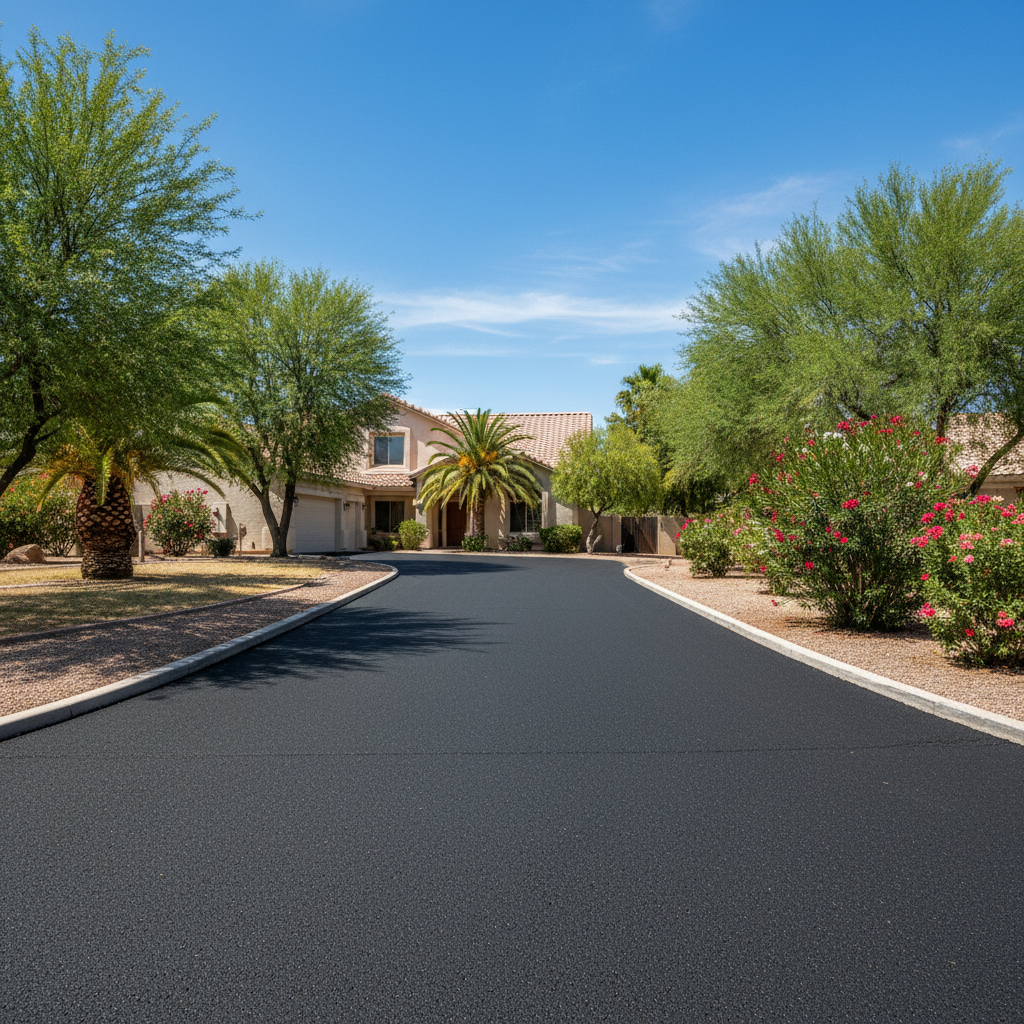
You've put good money into your asphalt driveway, right? Whether it's brand new or a few years old, you want it to last. And here in Peoria, with our brutal sun and monsoon rains, making it 'last' actually takes some work. I see plenty of driveways around the Arrowhead Ranch area, and the ones that really hold up are the ones that get a little attention. So, let's chat about how to keep your asphalt tough and looking sharp for the long haul.
Making Your Driveway Last Longer: It's All About Stopping Problems Before They Start
Think of your driveway like your car. You wouldn't skip oil changes, would you? It's the same deal with asphalt. The biggest enemy out here isn't just heavy traffic; it's the sun's UV rays and water. They team up to break down the asphalt binder, which makes it brittle and prone to cracking. Not good.
- Sealcoating is super important: I really can't say this enough. A good sealcoat works like sunscreen and a rain jacket for your driveway. It puts back the oils in the asphalt, protects against UV damage, and seals up any tiny surface cracks. For most homes in Peoria, you'll want this done every 2-3 years. If your driveway gets a ton of sun, maybe even a bit more often.
- Good drainage really matters: Water sitting on your driveway is just asking for trouble. If you've got low spots where water pools after a rain, that water will eventually soak into the asphalt, freeze (rare here, but it does happen on some winter nights!), expand, and create cracks. Make sure your gutters are sending water away from the driveway and that the driveway itself has a slight slope for runoff.
- Watch out for heavy loads: I know it's tempting to park that RV or heavy work truck on your driveway, but asphalt isn't built for constant, extreme weight. If you often have heavy vehicles, think about pouring concrete pads for them or at least moving them around so they don't always sit in the same spot.
- Clean up spills fast: Oil, gas, and other car fluids are petroleum-based, just like asphalt. They'll soften and dissolve your driveway if you let them sit. Keep some kitty litter or absorbent material handy for quick cleanups.
Regular Upkeep: Small Jobs, Big Results
You don't need to spend hours every weekend, but a little routine care goes a surprisingly long way.
- Keep it tidy: Sweep off dirt, leaves, and other junk regularly. This stops organic stuff from breaking down and staining the surface, and it also keeps water from getting trapped underneath. A leaf blower, by the way, is a total lifesaver here.
- Weed control: Weeds and grass just love to pop up in cracks. They might seem harmless, but their roots can actually widen those cracks and cause bigger headaches. Pull them out or use a weed killer made for paved surfaces. Just be careful not to use anything that will stain or damage the asphalt itself.
- Fix small cracks: Don't wait for a small crack to turn into a pothole. Crack filling is one of the cheapest and most effective maintenance tasks you can do. It keeps water out, stopping further damage. You can buy crack filler at most hardware stores, or if you've got a lot of them, just give us a call at Peoria Precision Asphalt.
Warning Signs: When Your Driveway Needs Help
Your driveway usually tells you when it's in trouble. You just need to know what to look for, you know?
- Cracks: This is the most obvious one. Hairline cracks are normal over time, but if you see alligator cracking (that pattern of interconnected cracks that looks like alligator skin), that's a sign of a big problem with the base or severe oxidation. Longitudinal cracks (running parallel to the driveway) or transverse cracks (running across) can point to stress or movement in the subgrade.
- Potholes: These usually happen because cracks were ignored. Water gets in, freezes (if it's cold enough), and traffic pounds on the weak spot until a chunk of asphalt breaks away. Potholes need fixing right away to stop them from growing.
- Fading and aggregate showing: If your driveway looks gray instead of black, and you can see a lot of the small stones (aggregate) on the surface, it means the asphalt binder is wearing away. This is a clear sign that it's time for sealcoating.
- Soft spots or depressions: If parts of your driveway feel soft or spongy when you walk on them, or if you see areas where water always pools, it could mean there's an issue with the subgrade (the material under the asphalt). This is a more serious problem.
- Raveling: This is when the aggregate starts to loosen and come out of the asphalt, leaving a rough, pitted surface. It's a sign of advanced deterioration and usually means the asphalt is losing its binder.
When to Call a Pro (Like Us!)
Look, some things you can do yourself, like sweeping or filling a few small cracks. But there are times when you really need an expert's eye and the right gear.
- Lots of cracks or alligator cracking: If your driveway looks like a spiderweb or an alligator's back, it's beyond a simple crack fill. We'll need to figure out the root cause, which might involve patching, milling, or even a complete overlay.
- Potholes bigger than a dinner plate or many potholes: While you can patch small ones, large or numerous potholes often signal a bigger problem that needs professional repair for a lasting fix.
- Soft spots or big depressions: These usually mean there's an issue with the base layer or drainage. We can properly diagnose and fix these problems, often involving digging out and rebuilding the subgrade.
- Raveling or serious aggregate loss: When the surface is really falling apart, it's time for a professional assessment. We can tell you if a good sealcoat can still help, or if you need a more substantial repair like an overlay or replacement.
- Drainage problems: If water is consistently pooling in areas that weren't designed for it, we can check the grading and suggest ways to ensure proper runoff.
- Anytime you're not sure: Honestly, if you're looking at your driveway and just don't know what to do, give us a call. We're happy to come out, take a look, and give you an honest assessment and a free estimate. We've been working on Peoria driveways for years, and we know what it takes to keep them in top shape against that Arizona sun.
Taking care of your driveway isn't just about curb appeal; it's about protecting your investment and avoiding more expensive repairs later on. A little proactive maintenance now can save you a lot of headaches and cash down the road.