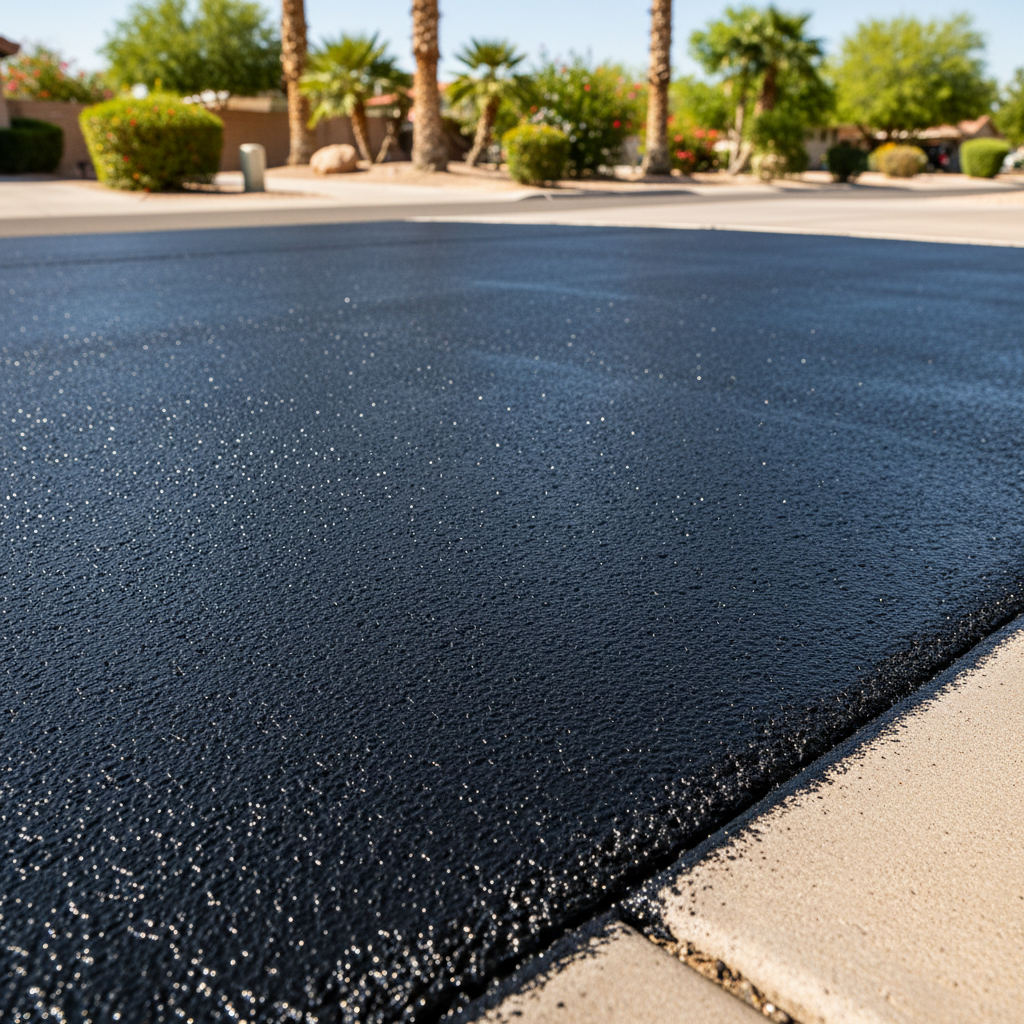
Is Sealcoating Your Peoria Driveway a DIY Job?
So, you're staring at your asphalt driveway. Maybe it's looking a little faded, a bit rough around the edges, and you're wondering if sealcoating is the answer. Chances are, it probably is. Especially here in Peoria, where that intense Arizona sun and monsoon rains really beat down on pavement. But the big question I get asked all the time is this: Can I just do this myself, or do I need to call a professional?
Let's get one thing straight right away: Sealcoating isn't rocket science. But it's also not just sloshing some black stuff on your driveway, either. There's a right way to do it, and there's a wrong way. And doing it wrong can actually make things worse, or just plain waste your money. I've seen plenty of driveways around the Arrowhead Ranch area that look like someone DIY'd them with a broom and a bucket. They usually don't last very long, you know?
Before You Even Think About Sealcoat: Prep is Key
Whether you're tackling it yourself or hiring someone like us at Peoria Precision Asphalt, the prep work is probably the most crucial part of the whole process. Skip this, and your sealcoat won't stick. It'll peel. You'll be right back where you started, only poorer.
Clean, Clean, Clean: You absolutely need to get your driveway spotless. I'm talking about sweeping off all loose dirt, leaves, and debris. Then, hit it with a pressure washer. Get rid of any oil stains, grease, or anything else that might stop the sealcoat from bonding. If you've got stubborn stains, you might need a degreaser and a stiff brush. Rinse it thoroughly after cleaning and let it dry completely. And I mean *completely* — no puddles, no damp spots. Here in Peoria, that usually means waiting a full 24-48 hours, especially after a good pressure wash.
Crack Repair: This isn't optional. Sealcoat isn't a crack filler, period. If you have cracks, even small ones, you need to fill them before you apply any sealcoat. For hairline cracks, a pourable crack filler might do the trick. For wider cracks (anything over about a quarter-inch), you'll need a hot-applied crack sealant, which is usually a job for a professional. If you don't fill those cracks, water will still get in, freeze (rarely here, but it happens!), expand, and cause more damage under your nice new sealcoat.
Patching Potholes/Damaged Areas: If you've got actual potholes or areas where the asphalt is crumbling, sealcoat won't fix that. Those spots need to be cut out and patched with new asphalt. This is almost always a job for a pro, honestly. Trying to DIY a patch can lead to uneven surfaces and future headaches.
DIY Sealcoating: What You're Getting Into
Okay, so you've prepped everything perfectly. Now for the actual sealcoating. If your driveway is small, relatively new, and in good shape with minimal cracks, you *might* be able to tackle this yourself.
Materials: You'll need a good quality asphalt emulsion sealer. Don't cheap out here; read the instructions carefully. You'll also need brushes, squeegees, rollers, and protective gear. Remember, this stuff is messy.
Application: Most DIY sealers go on in thin, even coats. You usually need two coats. The key is evenness. Overlap your strokes slightly. Don't apply it too thick, or it'll crack and peel. Don't apply it too thin, or it won't protect anything at all. And watch the weather! You don't want rain for at least 24-48 hours after application, and it needs to be warm enough to cure properly. That's usually not an issue here in Peoria, but humidity can slow things down.
Time Commitment: This isn't a quick afternoon project. Between cleaning, crack filling, drying times, and two coats of sealer with drying time in between, you're looking at a multi-day commitment. And you can't drive on it for at least 24-48 hours after the final coat.
When to Call a Pro (Which is Most of the Time)
Honestly, for most homeowners — especially with larger driveways or any significant damage — calling a professional is just the smarter move. Here's why:
Expertise and Equipment: We've got the industrial-grade equipment for thorough cleaning, hot crack filling, and commercial-grade sealants that you simply can't buy at a big box store. These sealants are often more durable and last longer, too.
Proper Repair: We can accurately assess and repair all types of damage, from minor cracks to significant potholes. This ensures a solid foundation before we even think about sealing.
Even Application: Our crews use specialized spray equipment for a consistent, even coat. It looks professional and provides maximum protection. No streaks, no puddles, no missed spots.
Time and Hassle: You don't have to buy materials, rent equipment, spend your weekend sweating in the Arizona heat, or worry about making a mess. We handle it all.
Warranty: A reputable company like Peoria Precision Asphalt will stand behind their work. If something goes wrong, we'll fix it.
After the Sealcoat: Maintenance Matters
Once your driveway is sealcoated, whether you did it or we did, a little maintenance goes a long way to making it last. Keep it clean, sweep off debris regularly, and address any new cracks as soon as they pop up. Avoid parking heavy vehicles on it immediately after sealing, and try not to turn your steering wheel while stationary, as that can scuff the fresh surface.
Sealcoating is a great way to protect your investment and keep your property looking sharp. If you're in Peoria and want to discuss your driveway, give us a call. We're happy to give you an honest assessment of what your driveway needs and whether DIY is even a realistic option for your specific situation.