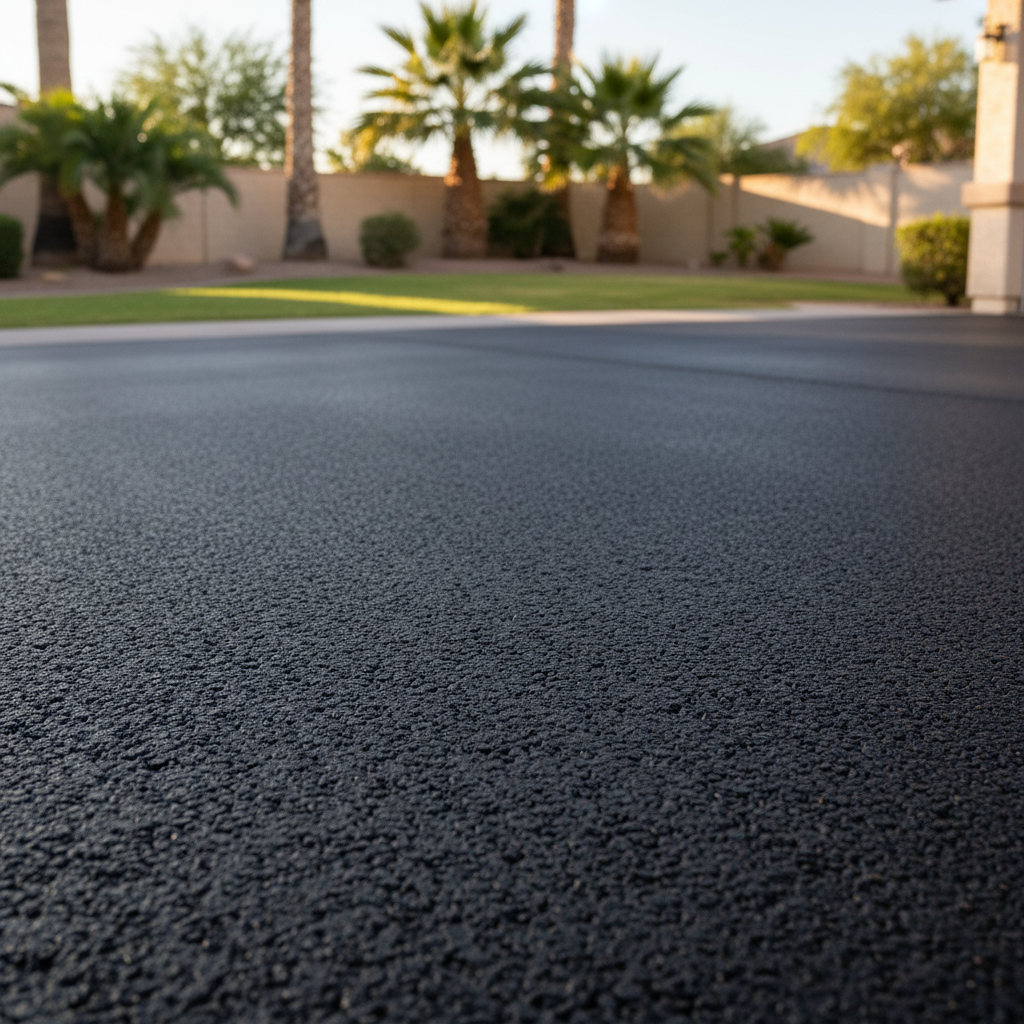
What's the difference between commercial and residential asphalt?
You might think asphalt is asphalt, right? And for the most part, the material itself is pretty similar. But the big difference between commercial and residential paving, especially here in Peoria, really comes down to two main things: how big the job is and how much traffic it sees. Residential driveways, even a long one, are built for just a few cars each day. Commercial parking lots, access roads, or HOA streets? They're designed to handle hundreds, sometimes thousands, of vehicles daily. That includes heavier trucks and delivery vans, too. This means a thicker base layer, often a thicker asphalt layer, and sometimes different asphalt mixes specifically made for higher stress and wear. We're talking about a much tougher construction, one that can really stand up to that kind of abuse, especially with our intense Arizona sun beating down on it year-round.
How long should a commercial asphalt parking lot last in Peoria?
That's a question I get quite a bit, and the honest answer is: it depends. A commercial lot that's built well and maintained properly can easily last 20-30 years, sometimes even longer. But 'properly maintained' is the absolute key, particularly in our desert climate. If a lot doesn't get sealed regularly, if cracks aren't filled quickly, or if drainage problems aren't fixed, you'll see its lifespan shrink drastically. The intense UV radiation here in Peoria, combined with the heat, speeds up how fast the asphalt binder oxidizes. This makes it brittle and much more likely to crack. So, while the initial build quality is super important, ongoing maintenance is what truly decides how much life you'll get out of it.
Why do I see so many cracks in commercial parking lots around Peoria?
Cracks are a common sight, and they usually point to a few different issues. First, like I just said, our Arizona sun is brutal. It dries out the asphalt, making it less flexible and more prone to cracking. Second, heavy traffic, especially from bigger vehicles, puts a lot of stress on the pavement. Over time, this stress can lead to fatigue cracking. Third, and this is a big one, is the sub-base. If the ground underneath wasn't prepared correctly, or if there are drainage problems letting water get under the asphalt, you'll see cracks pop up much faster. Here in Peoria, we often deal with expansive clay soils in certain areas, which can shift and move, putting extra stress on the pavement above. Catching these cracks early with crack filling is crucial to keep them from turning into potholes. What a headache those are!
What's the difference between sealcoating and an overlay for a commercial lot?
Think of it like this: sealcoating is like putting sunscreen on your skin, and an overlay is more like getting a new top layer of skin. Sealcoating is a preventative maintenance step. It's a thin liquid layer we apply to the surface of existing asphalt. It protects against UV rays, water getting in, and oxidation, which helps extend the pavement's life. It works best for lots that are in good shape with only minor cracking. An overlay, on the other hand, means we put a new layer of asphalt, usually 1.5 to 2 inches thick, right over the existing pavement. This is what we do when the existing asphalt has more serious cracking or minor deterioration, but the base underneath is still solid. It's a more substantial repair that restores both the structural integrity and the look of the lot. You can't sealcoat a lot that really needs an overlay, and you shouldn't overlay a lot that just needs sealcoating.
How often should commercial parking lots be sealcoated in Peoria?
For commercial properties here in Peoria, I generally recommend sealcoating every 2-3 years. Some folks might try to stretch it to four, but with our intense sun and heat, you're really pushing your luck at that point. The sealcoat wears down over time, and its protective qualities just diminish. Regular sealcoating does more than just protect the asphalt from the elements; it also brings back that rich black color, which really helps with curb appeal. It's a relatively inexpensive way to significantly extend a parking lot's life and put off more costly repairs like overlays or full replacements. It's just smart preventative maintenance.
Why do some commercial lots look so much better than others?
It usually comes down to two things: the quality of the initial installation and how well it's maintained over time. A lot that was built right from the start — with a proper base, good drainage, and quality materials — is going to hold up better, naturally. But even the best installation won't last without maintenance. The lots that always look sharp are the ones with a proactive maintenance schedule. They get sealcoated regularly, cracks are filled as soon as they show up, and potholes are repaired quickly. It's not magic; it's just consistent care. Peoria Precision Asphalt works with many property managers and HOAs to set up these kinds of maintenance plans, and you can really see the difference in how long their properties last and how good they look.