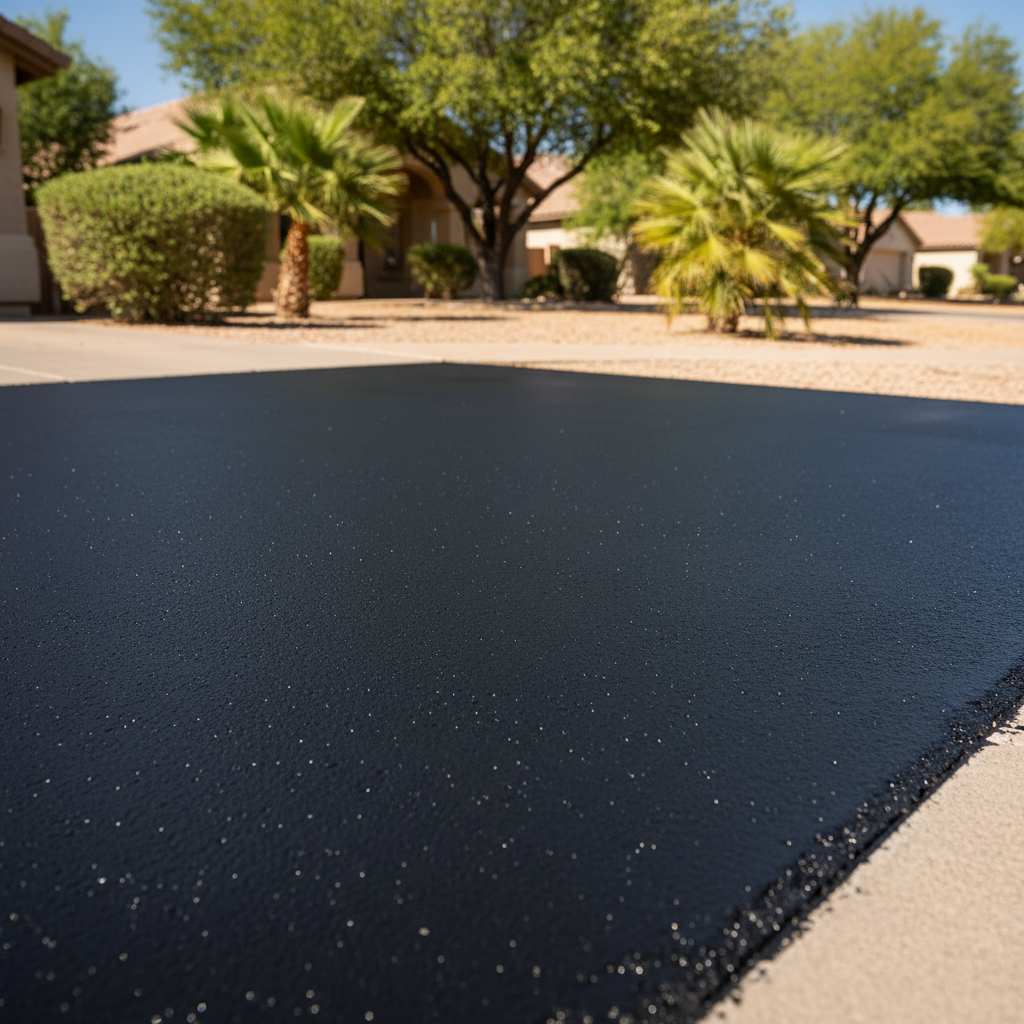
What exactly is sealcoating and why do I need it for my driveway?
Alright, let's talk sealcoating. It's basically a protective layer we put over your asphalt driveway. Think of it like sunscreen for your pavement, or maybe a fresh coat of paint that also strengthens the surface. Usually, it's a liquid product, asphalt-based, sometimes with a few aggregates mixed in, and we roll it right over your existing asphalt. Its main job? To shield your driveway from the elements – especially that brutal Arizona sun, which is no joke out here in Peoria. That UV radiation, plus water seeping in and oil spills, slowly breaks down the asphalt binder. Over time, your driveway gets brittle and starts to crack. Sealcoating puts a solid barrier between your asphalt and all that punishment, making it last longer and look sharp.
How often should I have my asphalt driveway sealcoated in Peoria?
This is probably the most common question I get, and honestly, there's no single perfect answer. But I can give you a pretty good rule of thumb. For most residential driveways here in Peoria, I generally tell folks to get it sealcoated every two to three years. Now, that can change based on a few things: how much traffic your driveway sees (do you have a busy household with multiple cars coming and going all day, or is it just one car once a day?), how well the original asphalt was put down, and even the specific conditions of your property. For instance, if your driveway bakes in full sun all day, especially in those unshaded neighborhoods like parts of Fletcher Heights, you might lean towards that two-year mark. If it's mostly shaded, you could probably stretch it to three years. We're not trying to sell you something you don't need, but waiting too long can let small cracks turn into big problems, and then you're looking at much more expensive repairs down the road. Just sayin'.
What's the best time of year to get my driveway sealcoated in Peoria, AZ?
Timing is absolutely everything, especially with our desert climate. You can't just slap sealcoat down whenever. We need specific conditions for the material to cure right. Generally, the best time for sealcoating in Peoria is during the spring (March to May) or the fall (late September to November). What we're really looking for is consistent daytime temperatures of at least 50°F (and ideally 70°F or higher) and no rain in the forecast for at least 24 to 48 hours after we apply it. The nights can't be getting too cold either, because that really slows down the curing process. Trying to do it in the dead of summer when it's 115°F is tough because the material can dry too fast and won't bond correctly. And trying it in the winter when temperatures dip too low means it won't cure at all. So, spring and fall are definitely your sweet spots for the best results and durability.
Can sealcoating fix existing cracks and potholes in my driveway?
This is a big misconception, and it's important to clear up. Sealcoating is a preventative measure, not a magic fix for major damage. Think of it like painting over a hole in your wall – it doesn't actually fix the hole, it just covers it up for a little while. Before we even think about sealcoating, any existing cracks need to be cleaned out and filled with a proper crack filler. Potholes? Those absolutely need to be patched and compacted. If you sealcoat right over cracks and potholes, they're just going to show through the new layer, and those problems will keep getting worse underneath. We always inspect the driveway first. If we find significant damage, we'll give you an honest assessment and recommend the necessary repairs before applying any sealcoat. That's how Peoria Precision Asphalt does it – we want to make sure the job lasts, you know?
How long do I need to stay off my driveway after sealcoating?
Patience is really key here, and it's probably the hardest part for homeowners. After we apply the sealcoat, you'll need to keep all vehicles and heavy foot traffic off the driveway for a minimum of 24 to 48 hours. Sometimes, if the weather is cooler or more humid, it might even be closer to 72 hours for a full cure. The sealcoat simply needs time to harden and bond properly to the asphalt. Driving on it too soon can leave tire marks, scuff the surface, or even pull up the fresh sealcoat, which ruins the job and wastes your money. We'll always give you a specific timeframe based on the conditions on the day of application. It's a minor inconvenience for a much longer-lasting, better-looking driveway, believe me.
Will sealcoating make my driveway slippery, especially when wet?
This is a valid concern, especially if you have a sloped driveway. A freshly sealcoated driveway will definitely be darker and can feel a bit slicker initially, but a properly applied sealcoat shouldn't be excessively or dangerously slippery. Most quality sealcoat products, especially the ones we use, contain fine aggregates (like sand) that are mixed in or applied with the sealcoat. These aggregates provide texture and improve traction. So, while it might feel a little different at first, once it's fully cured, it gives you a safe, non-slip surface. If you're particularly worried about a steep incline, we can absolutely discuss options for adding extra aggregate for enhanced grip.
Is sealcoating worth the cost, or is it just a cosmetic thing?
Oh, it's absolutely worth it, and it's much more than just cosmetic. Think of your driveway as a significant investment in your home's curb appeal and functionality. Sealcoating is a relatively inexpensive preventative maintenance step compared to the cost of major asphalt repairs or, eventually, a full driveway replacement. By protecting your asphalt from UV rays, water, and chemicals, you're preventing the breakdown of the asphalt binder, which is what holds everything together. This means fewer cracks, less crumbling, and a much longer lifespan for your driveway. Over time, you'll save a lot of money by avoiding costly repairs. Plus, let's be honest, a well-maintained, dark black driveway just looks a whole lot better than a faded, gray, cracked one. It boosts your home's curb appeal, and that's always a good thing, right?